The fourth essay
The hours
Before a monastery had bells it had a board of good wood and a mallet, and it is the board that still wakes the brethren.
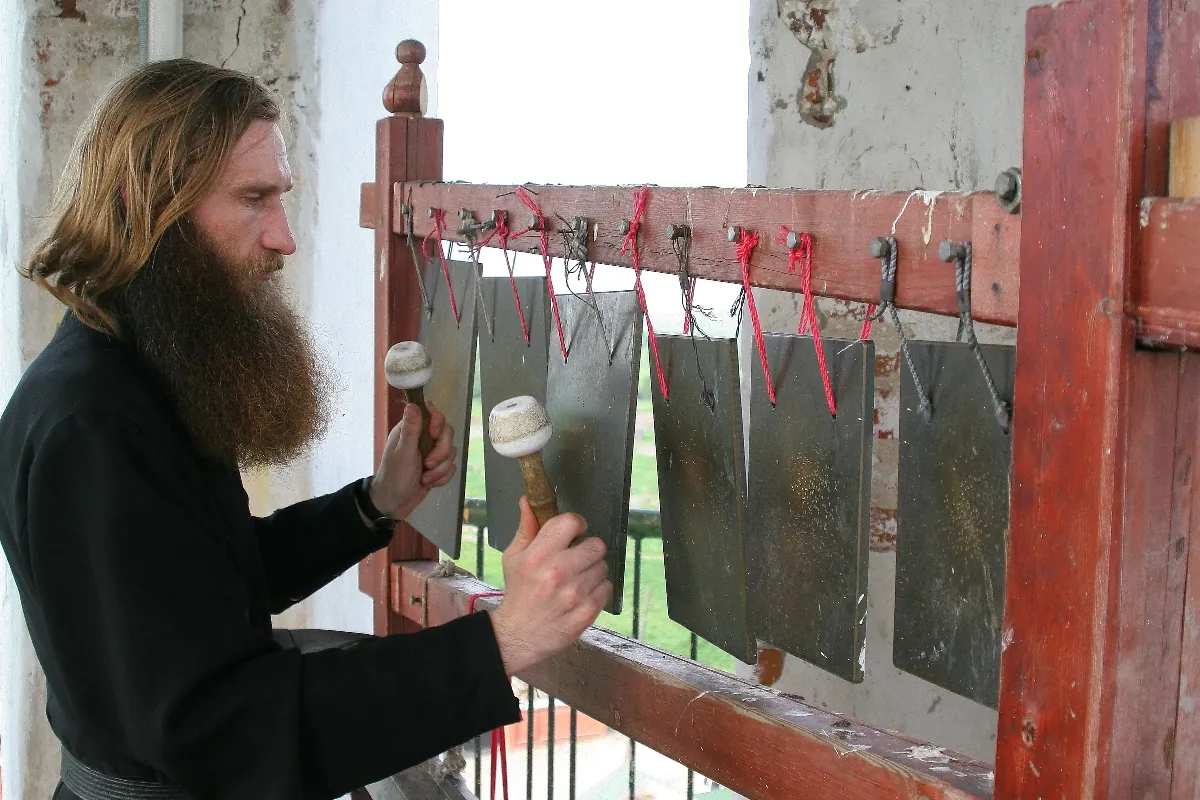
A monastery's day is not kept by the sun or by the brethren's own wish, but by a sound. Something is struck, and every brother puts down what he has in his hand and goes to the church. The Greek houses have three things to strike: a long wooden board, an iron one, and bells.
Athelstan Riley, travelling among the monasteries of Mount Athos, photographed a group of monks under an archway at Vatopedi with the wooden one hanging over their heads, and stopped to explain it to his English readers.
“This is nothing more than a board of sound and good wood; on being struck with a hammer it produces a resonant noise, which can be heard a very long distance. The semantron is used at Athos instead of bells for calling to prayer, and was formerly universally employed by the Eastern Christians.”
Bells, he says, were first brought in the year 865, when the Venetians presented twelve to the emperor Michael III.
In the house, at this hour
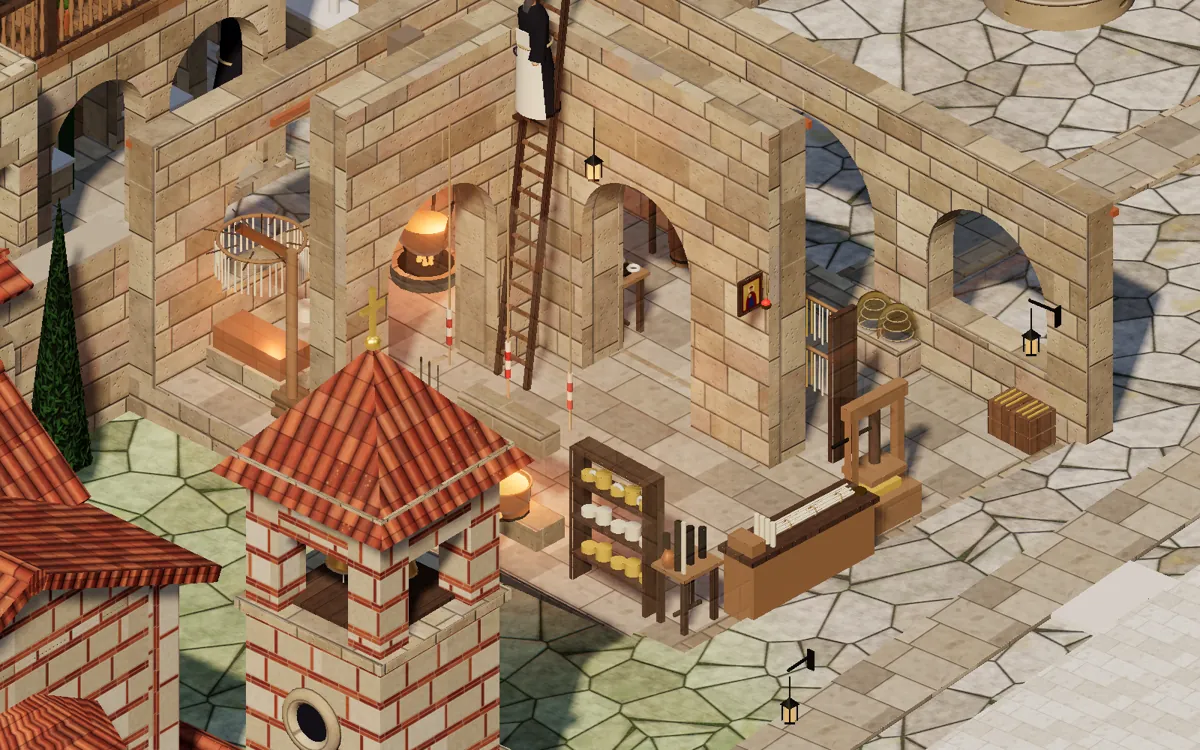
The bell tower
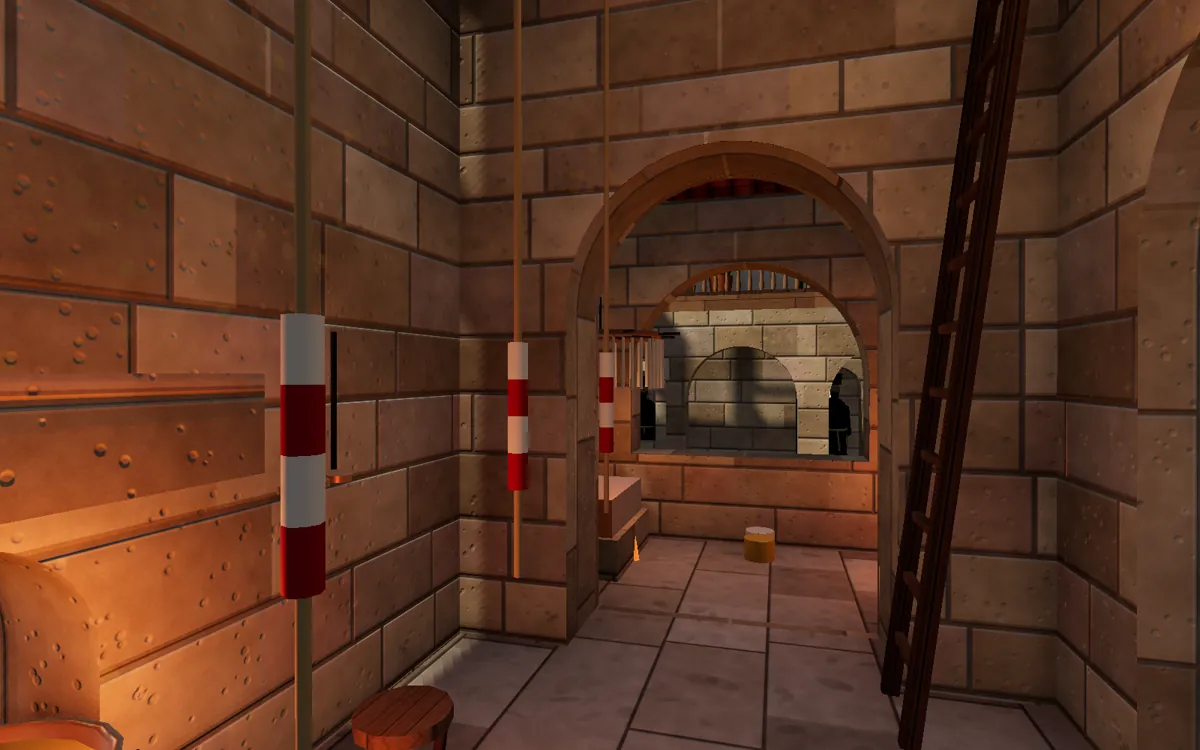
At the foot of the tower the chandler dips and rolls the tapers. The bell ropes come down into the middle of his workshop.
Stand there now ›Three blows, and round the church
There are two wooden semantra, Riley goes on: the large fixed ones and those carried in the hand. He watched the smaller one played before every service.
“Before each service one of the monks takes a hand semantron, and, standing before the west end of the catholicon, strikes on it three hard and distinct blows with the little wooden mallet. He then proceeds round the outside of the church, playing on the semantron by striking blows of varying force on different parts of the wood at uneven intervals, always winding up the ‘tune’ with three blows similar to those at the beginning.”
The third kind is of iron, “in the form of a half-hoop”, hung by chains in the porch of the church or among the bells in the tower, and sounding somewhat like them.
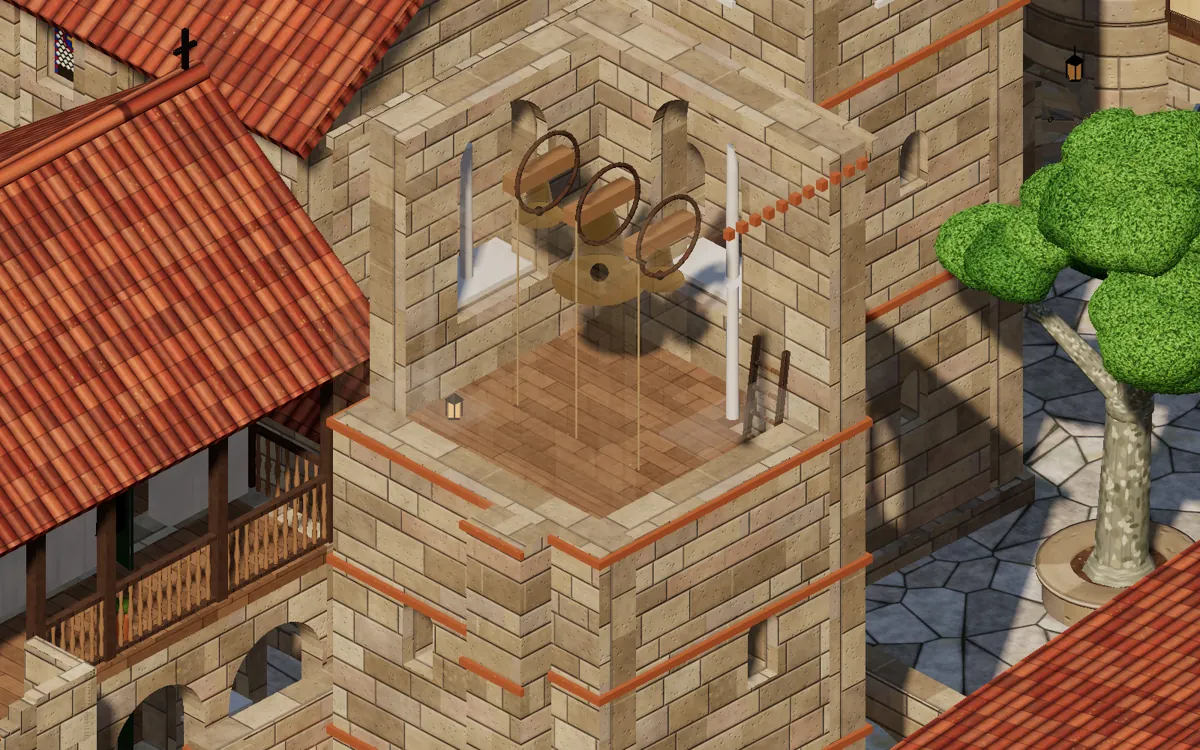
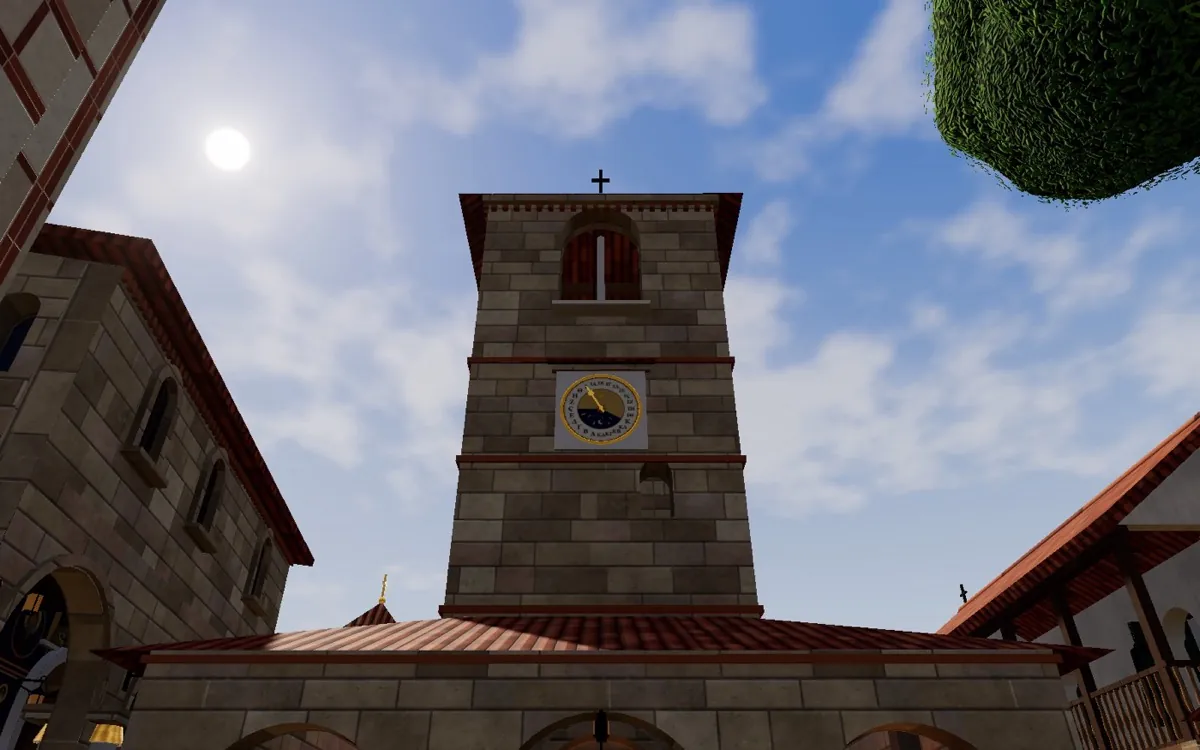
The Sky Monastery has all three. The great wooden semantron and the iron one hang in the open porch along the west front of the katholikon. In the tower are three bronze bells on oak headstocks: the great bell, named for the Mother of God, cast in Venice and carried up the rock in the net, with the Forerunner and St Nicholas on either side of it. The great bell's voice carries to every rim of the summit.
The board at midnight
The hardest of the hours is the one kept in the dark. “Every night at twelve o'clock the semantron sounds for the night offices,” Riley wrote, “and although I am not a light sleeper it constantly woke me up.” Long before him Robert Curzon, a guest of the great monastery at Meteora, slept through the same call. He had rolled himself into a corner of the guest chamber and was asleep at once,
“nor did the dull, monotonous sound of the mallet, which, struck on a suspended board, called the good brethren to midnight prayer, disturb me for more than a moment.”
The Sky Monastery is gentler with its brethren. They sleep from nine until five, and Orthros, the morning office, begins at half past five, with the Liturgy following straight upon it. The ecclesiarch, who keeps the church, strikes the iron semantron a little before Orthros, before Vespers and before Compline. So the founders left it. The ringing is written as a table in the Church Book, and the council of the house may move it as it may move any hour.
The clock in the tower
Halfway up the tower, in the ringer's room, stands the house clock. Weights of field stone drive it, and it strikes every hour on a little bell of its own. Brother Kallinikos the chandler, who makes the candles at the tower's foot and rings its bells, winds it each morning. In the north square below is the hour stone, where the dial is read, and beside it the board on which the council posts the hours of the day.
The whole of the house's time, with its day, its year and its seasons, is set out in the calendar, the clock and the seasons.
In the house, at this hour
The hour stone
Stand in the north square where the dial is read. The board of notices is a few steps away.
Stand there now › Or read the board ›
What is invented. The bell tower, its three bells, its clock and its chandler belong to the Sky Monastery, as do the hours it keeps. The semantra are as Riley saw and heard them on Athos, and the midnight board is Curzon's at Meteora.
Where this comes from. Athelstan Riley, Athos, or the Mountain of the Monks (London, 1887), pp. 90–91; Robert Curzon, Visits to Monasteries in the Levant (London, 1849), chapter XX, pp. 301–302. Both in public-domain scans at the Internet Archive. The year 865 for the first bells is Riley's own statement.
 The next essayThe books ›A library behind a cupboard, and the Gospels that were sold and given back.