The eighth essay
The year
Every monastery has one day that is its own. The rest of the year leans toward it: the fasts before, the harvest after, and the long quiet of the winter.
The great church of the Sky Monastery is dedicated to the Transfiguration, and so is the katholikon of the Great Meteoron. The feast is kept on the sixth of August. It remembers the day Christ went up a mountain with three of his disciples and was seen by them in light, and of all the feasts of the year it is the one that belongs to high places.
On Mount Athos it is kept on the very summit. Athelstan Riley had timed his whole journey from England to be there for it, and at the monastery of Philotheou he learned that he had the day wrong.
“…we heard, to our dismay, that this was the very night when the monks of Athos celebrate the liturgy on the top of the Holy Mountain in the little chapel of the Transfiguration. The Feast of the Transfiguration is kept on the same day as in our own Church, i.e. on August 6.”
He had miscalculated, he says, partly through carelessness and partly through the difference between the old and the new styles of the calendar. He ordered the mules at once. When at last he climbed the white marble peak, he found the chapel of the Transfiguration on its top, without windows and roofed with a dome of loose stones.
“We found ourselves in a cloud, and it being very chilly we took refuge in the little Chapel of the Transfiguration, lighted the lamps of the iconostasis (with great difficulty, for the wicks, like everything else in the chapel, were as wet as they could be), and sang Magnificat.”
In the house, at this hour
The vineyard
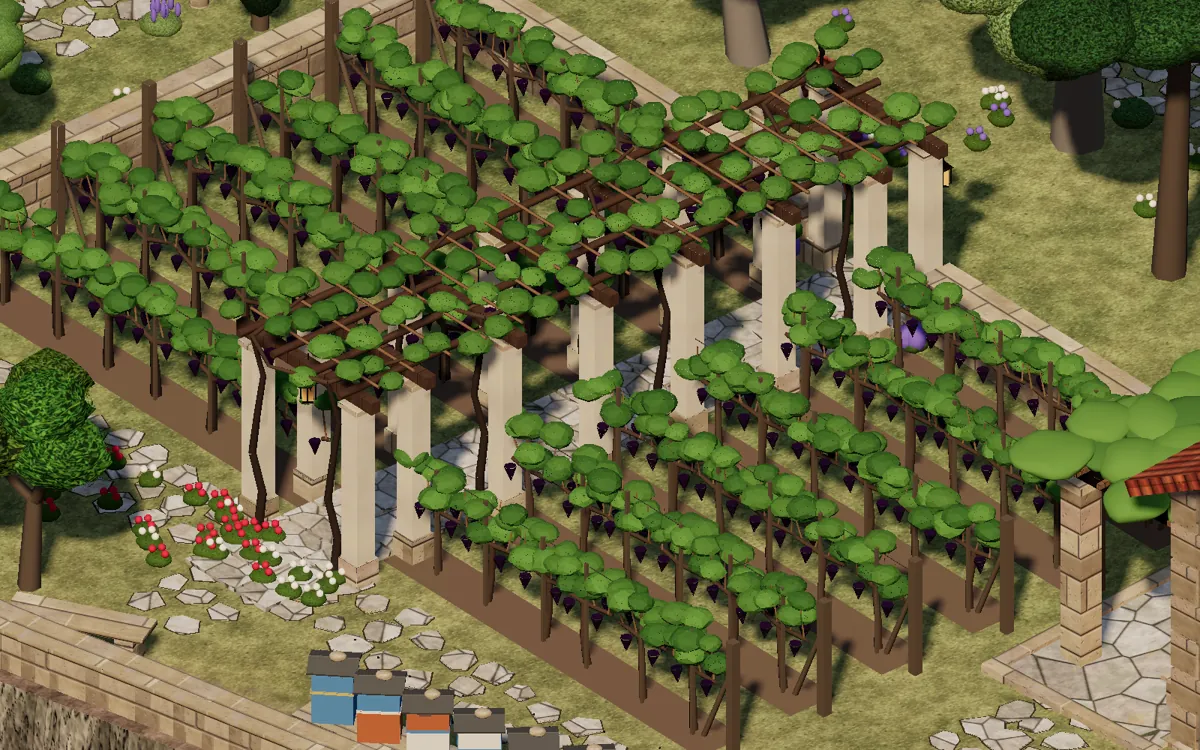
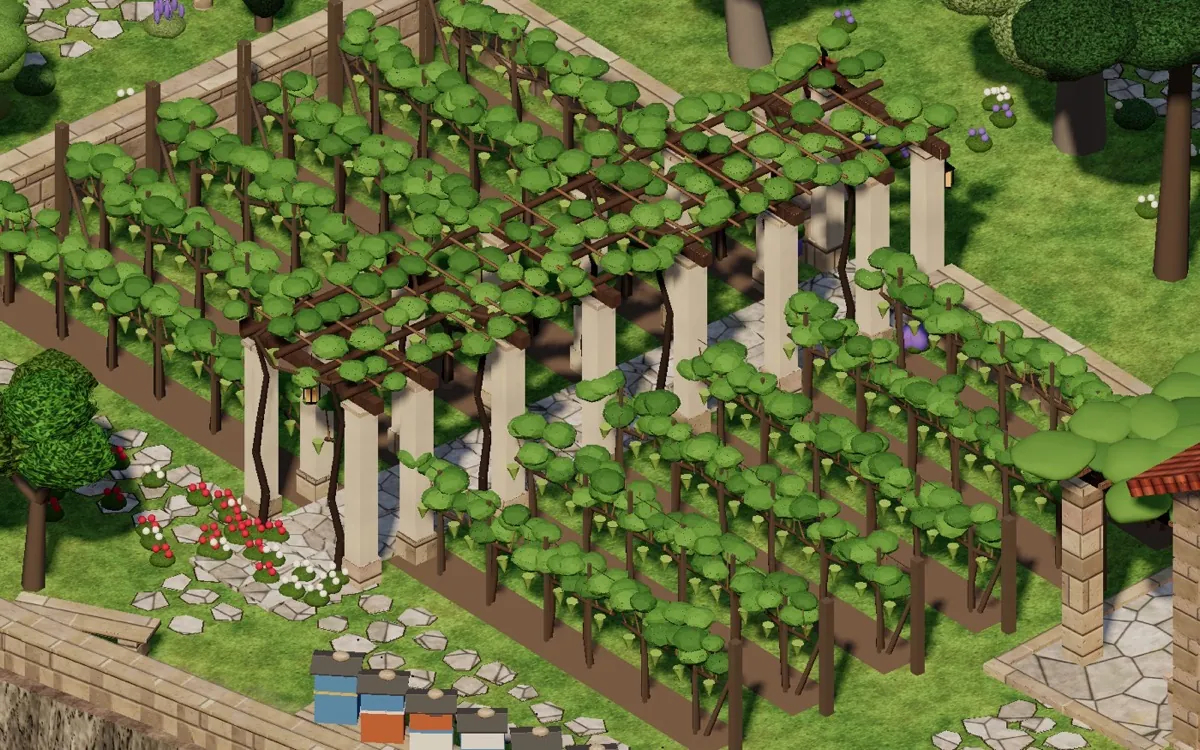
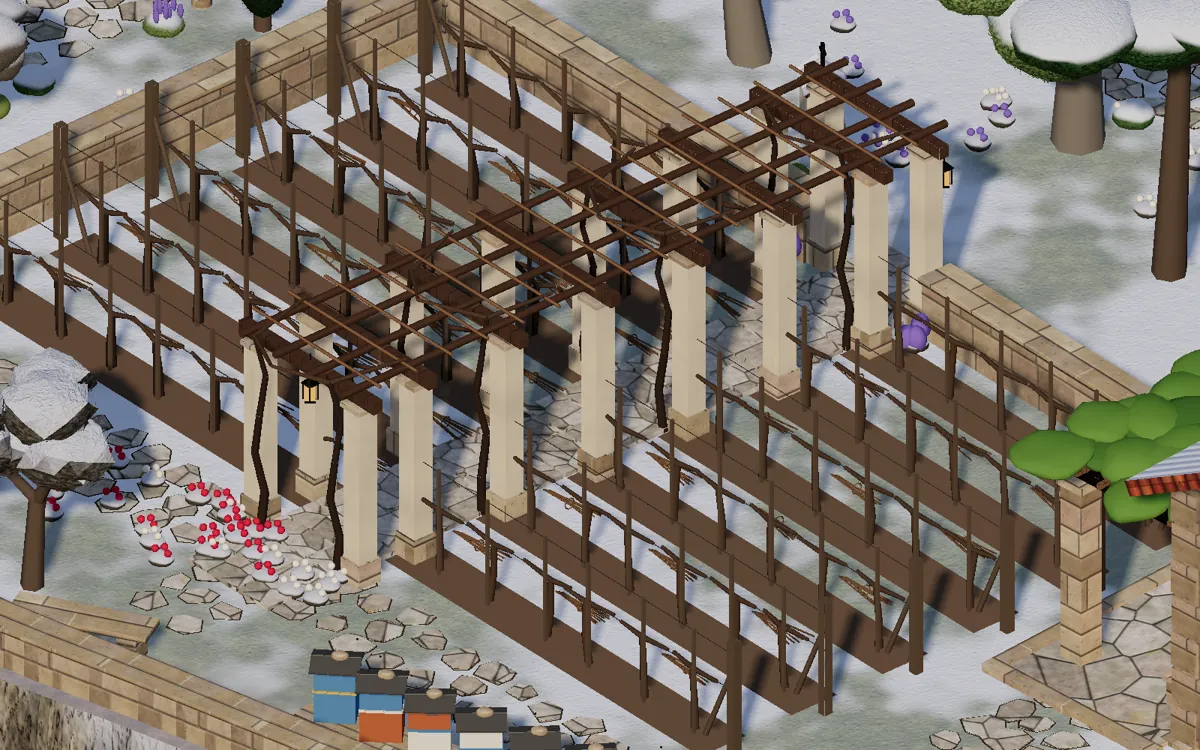
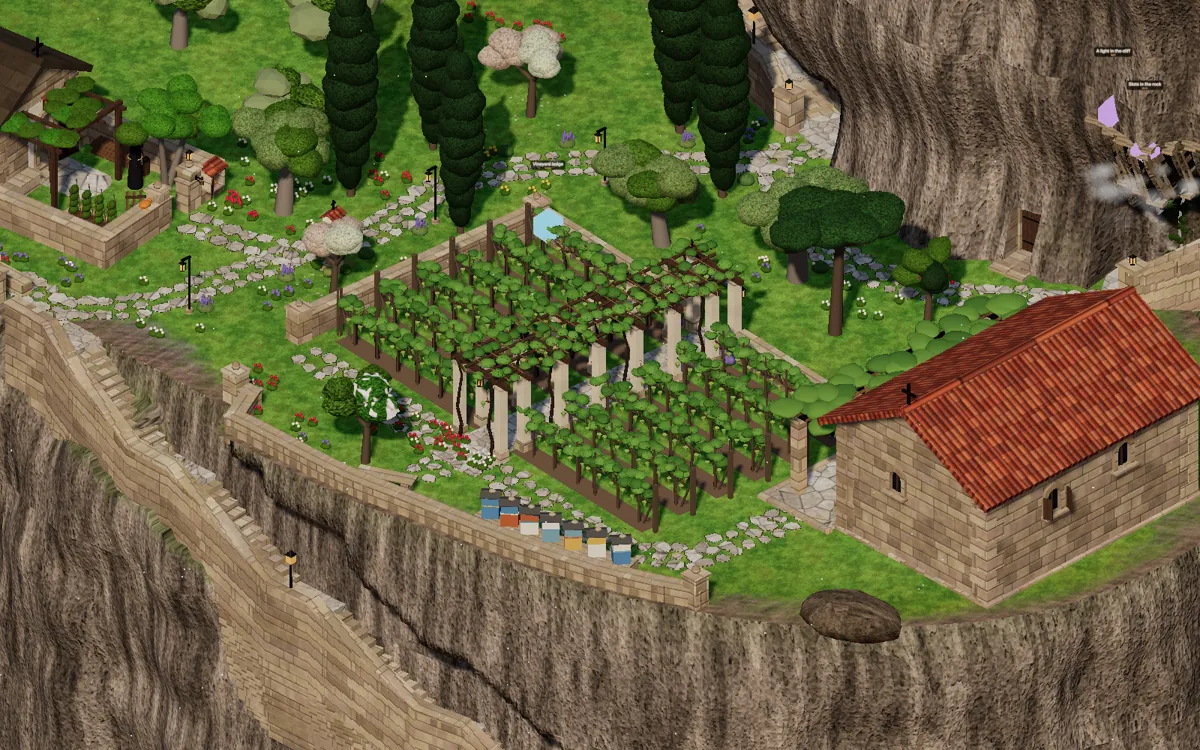
Six rows either side of the vine walk, from the shrine of St Tryphon, the vinedressers' saint, at the gate to a stone bench on the rim, with the painted hives along the parapet.
Stand there now ›The first grapes
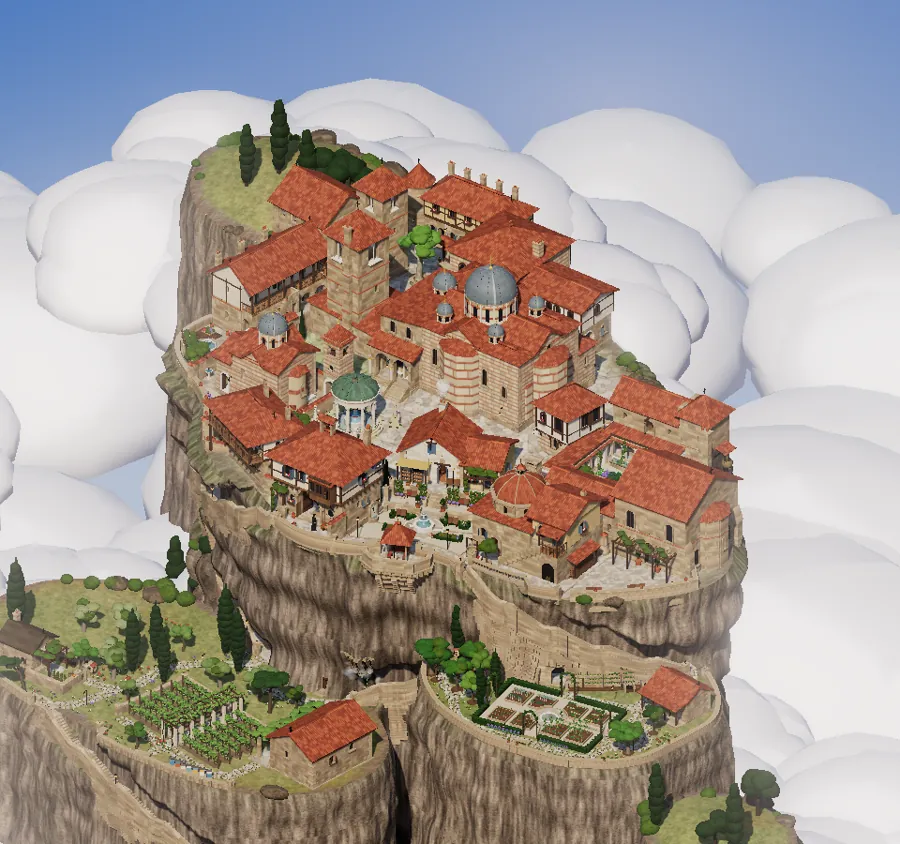
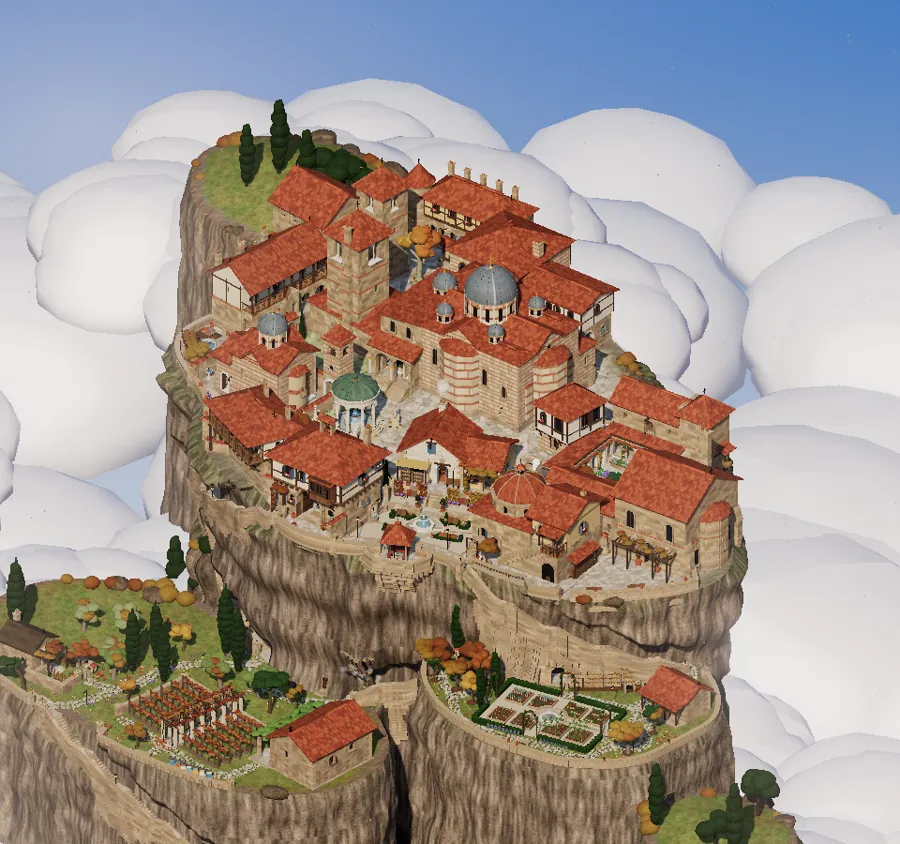
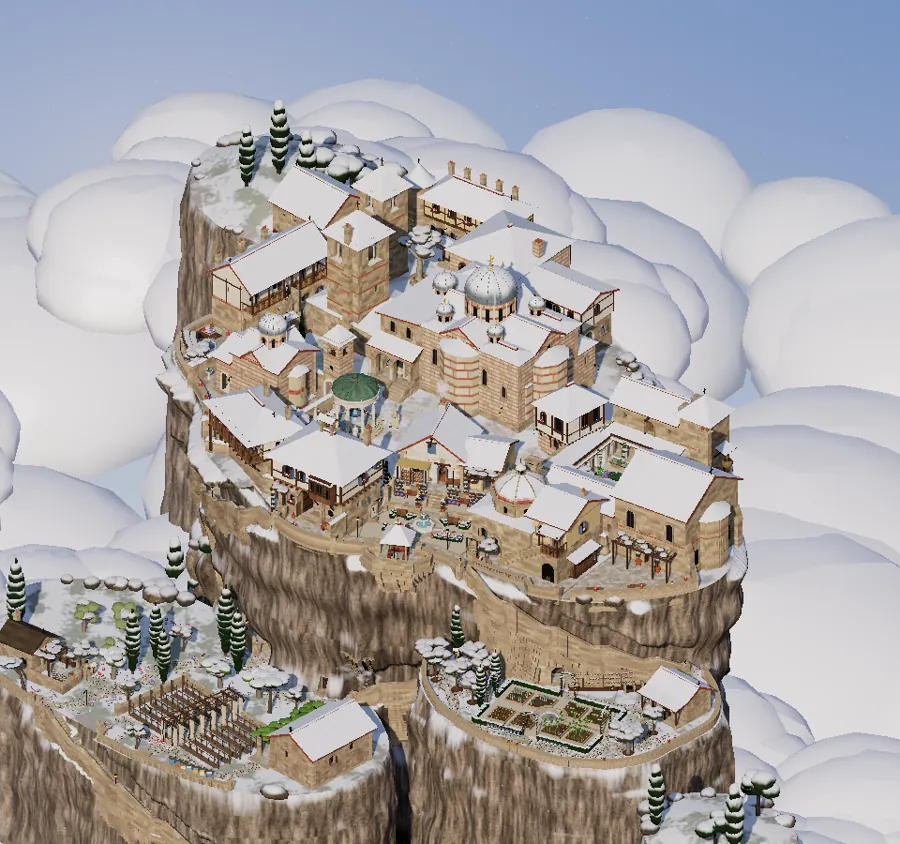
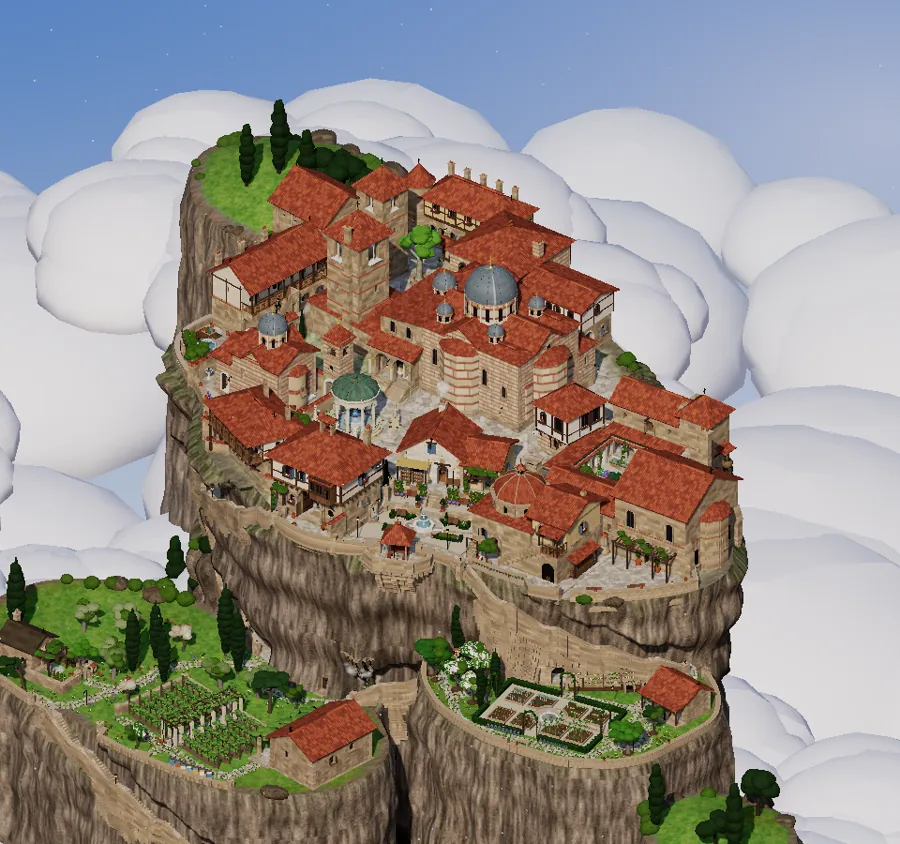
The Sky Monastery's year is short. It has twenty-eight days, four weeks of seven, and each week stands for a quarter of the Church's year, so that every feast still falls in its own season. The Transfiguration is the sixth day. At its vigil the first grapes of the year are cut and blessed in the church, and from that day the vintage is open.
The brothers of the fields then go from the rows to the press and from the press to the cellar as the days pass. The grapes are picked and trodden; the must is pressed into the casks; the new wine is racked off in the cellar under the rock while the rows are dug and manured. On the twentieth day, the feast of St Tryphon, the first cuts of the pruning are blessed among the vines, and the prunings are bundled for the hearths. Then the tending begins again.
The fast
The other half of the year's rhythm is what is left off the table. The travellers met it at every monastery door. At Barlaam, Robert Curzon asked the abbot to dinner and found that the old man could eat no meat. At the great monastery the next night the abbot's own supper had none in it either, though Curzon thought it very savoury nevertheless.
In the Sky Monastery every Wednesday and Friday is a fast, and so are the days before the great feasts: the Apostles' fast, the Dormition fast, the Nativity fast and Great Lent. On those days no wine is drunk at table. A feast lifts the fast of the day it falls on, and in Great Lent the Annunciation alone does so. The house's steward keeps the reckoning, and on the days between the fasts a cask comes up from the cellar.
The garden's year
The kitchen garden keeps the same calendar on its own terrace, eleven metres below the summit on the sunny side of the rock. Brother Phokas sows in spring, plants out as the summer comes, and brings greens and beans to the kitchen every day of the garden's plenty. The pears, apples, quinces and pomegranates are picked in the autumn, and the beds are dug and the fruit trees pruned in the snow. Twice a year, on the fourth day and the twenty-sixth, the comb is taken from the hives along the vineyard's parapet: honey for the table, and wax for the chandler's candles.
The whole year, day by day, with today marked on it, is in the calendar, the clock and the seasons.
In the house, at this hour
The kitchen garden
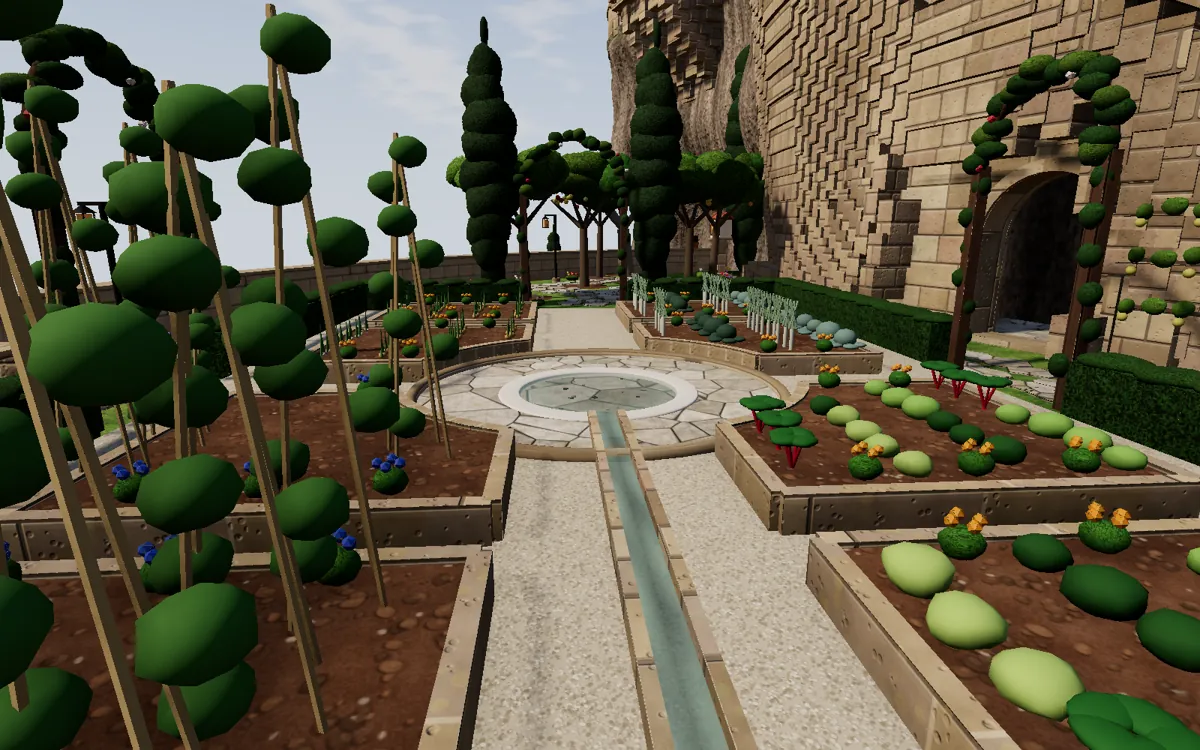
Four quarters round a round basin, with pears and apricots on the warm wall, an orchard at the west end, and the shrine of St Phokas the gardener at the tip over the cloud sea.
Stand there now › Or go to the winery ›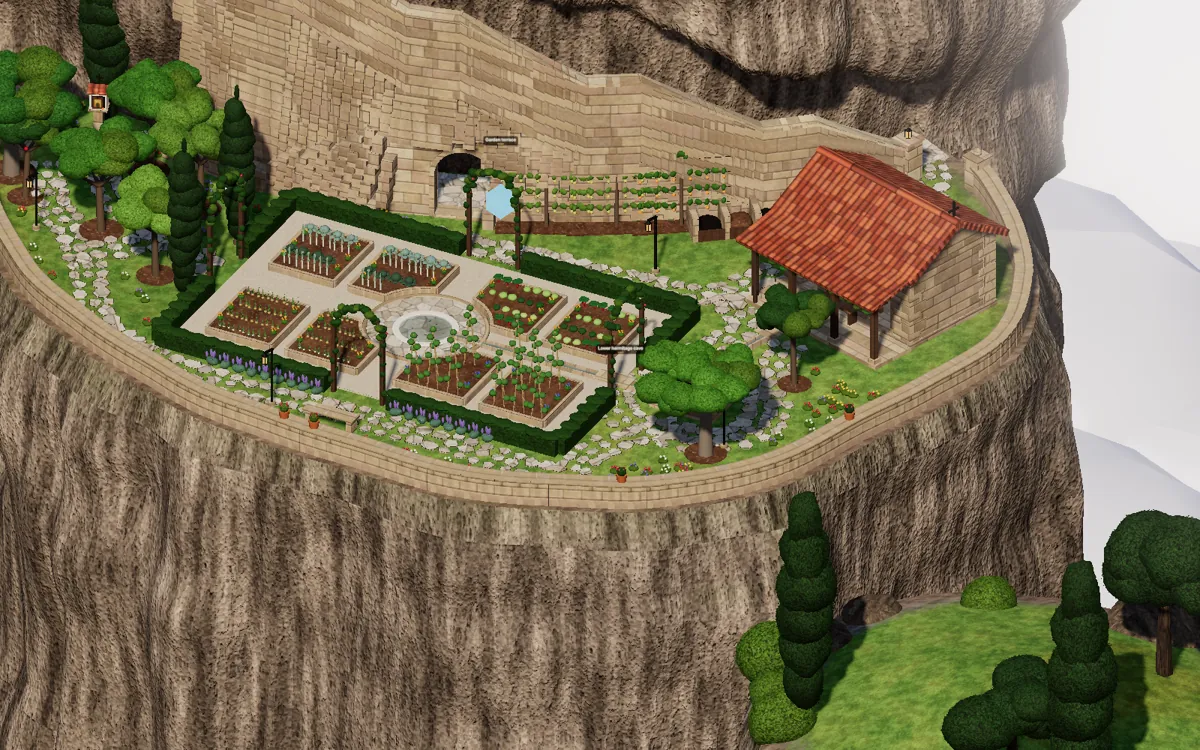
What is invented. The year of twenty-eight days, its vintage, its fasts as the house keeps them, the vineyard, the garden and their brethren belong to the Sky Monastery. The feasts and fasts themselves are the Orthodox Church's. The night on Athos is Riley's, and the abbots' tables are Curzon's.
Where this comes from. Athelstan Riley, Athos, or the Mountain of the Monks (London, 1887), pp. 148–149 and 212–213; Robert Curzon, Visits to Monasteries in the Levant (London, 1849), chapters XIX and XX, pp. 285 and 301. Both in public-domain scans at the Internet Archive.
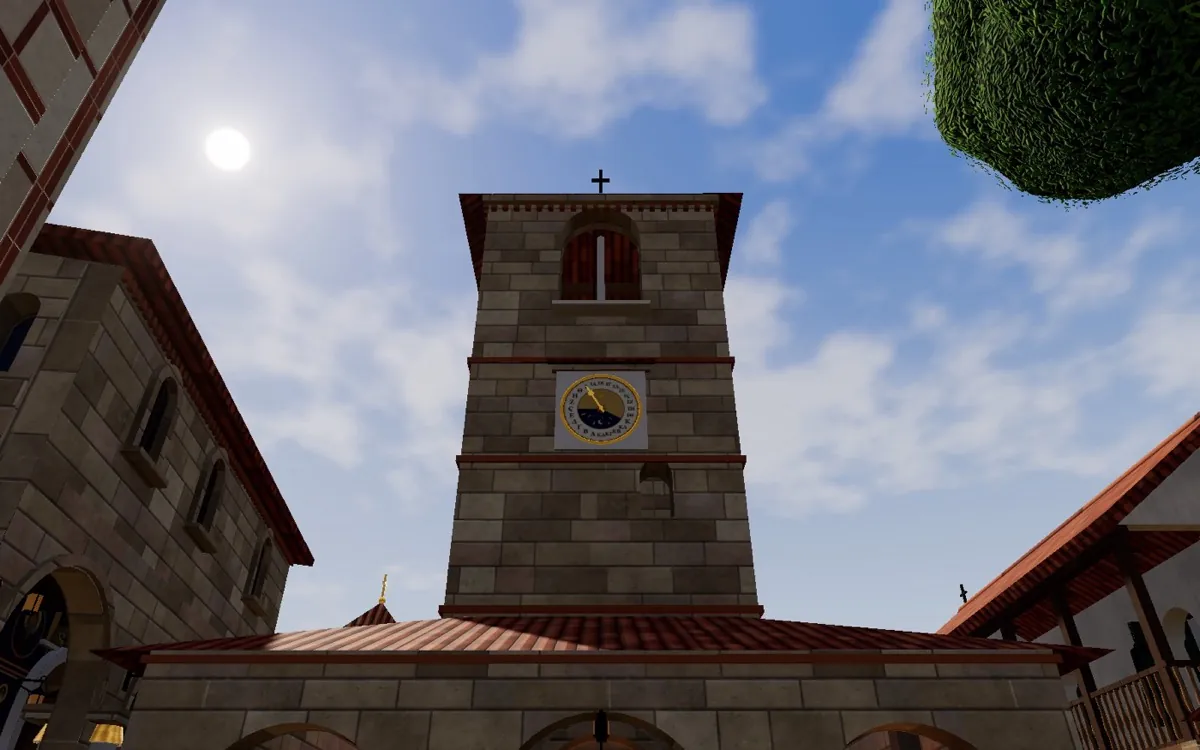 And thenThe calendar, the clock and the seasons ›Today's hours, the twenty-eight days, and what the rock looks like in each season.