The sixth essay
Bread and wine
The brethren eat together twice a day, in a hall built like a church. Everything on the table was grown, baked or pressed within a few minutes' walk of it.
The refectory of a Greek monastery is called the trapeza, the table, and it is the second room of the house after the church. Robert Curzon looked into the one at Barlaam on his way to the net.
“The refectory is a separate building, with an apsis at the upper end, in which stands a marble table where the sacred bread used by the Greek church is usually placed, and where, I believe, the agoumenos or the bishop dines on great occasions. The walls of this room are also painted: not, however, with the representations of celebrated eaters, but with the likenesses of such thin, famished-looking saints that they seem most inappropriate as ornaments to a dining-room.”
On Athos, Athelstan Riley counted the furniture of the old refectory at Vatopedi: marble tables of all shapes and sizes with rude stone seats, twelve down each side of the hall and one at the end for the presidents.
In the house, at this hour
The Great Hall
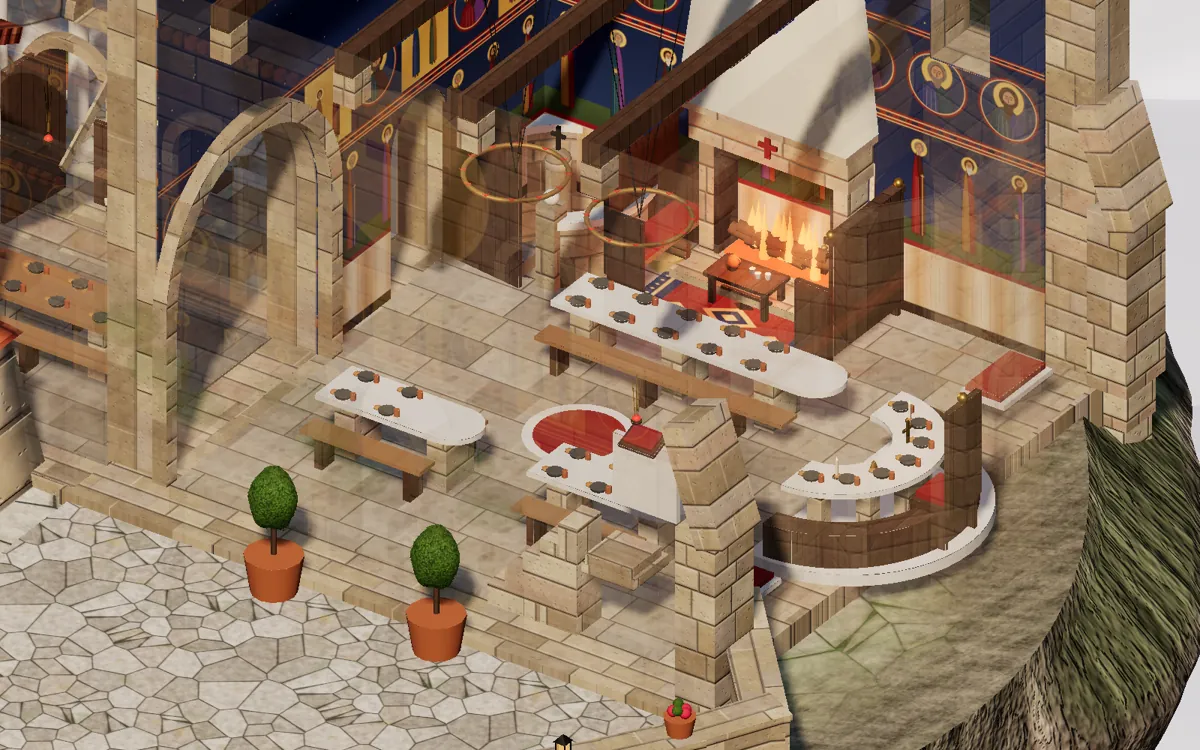
The refectory of 1562, opened by a great arch to the older hall. The abbot presides at the table in the apse under the Mystical Supper.
Stand there now ›The Sky Monastery's refectory shows two ages. The Old Hall is of the twelfth century, low and narrow under a painted barrel vault dimmed by lamp smoke. The Great Hall was added in 1562 and joined to it by a great arch, and at its east end is an apse, as at Barlaam, where the abbot's curved table stands on a marble dais. The house sits down to Trapeza at noon and to Supper in the evening.
All chimney and fireplace
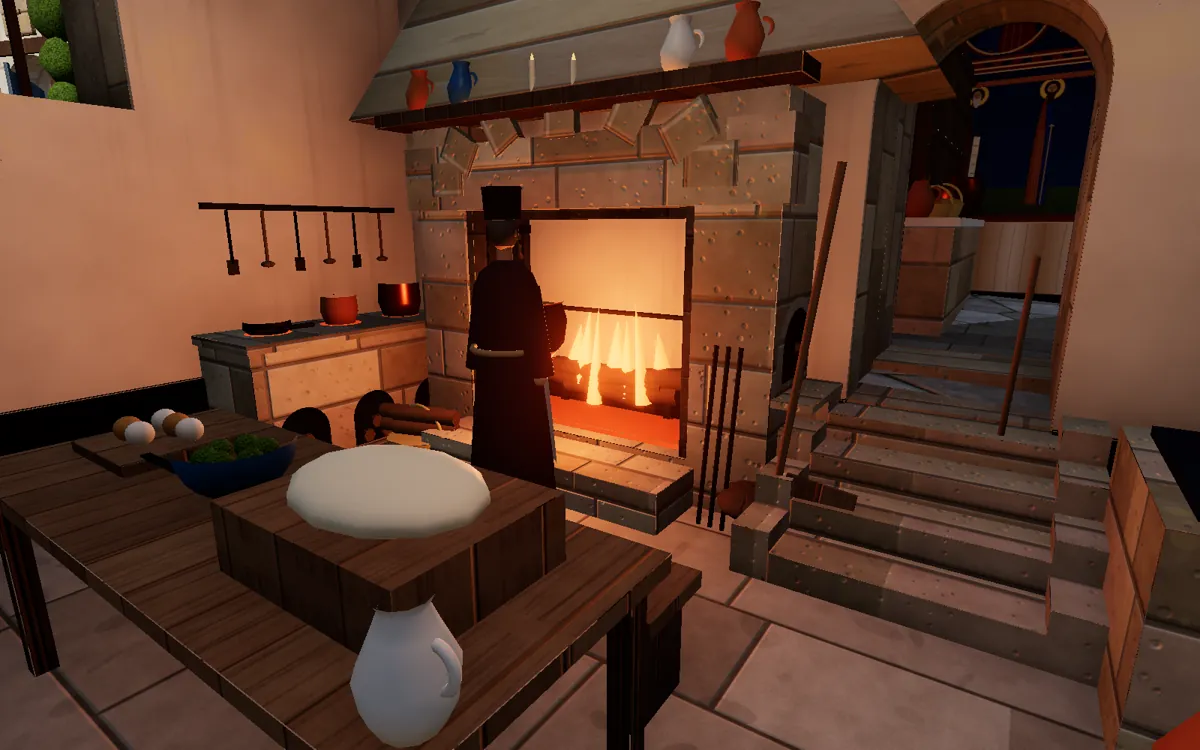
At the great monastery of Meteora it was the kitchen that stopped Curzon. It was a very ancient building, he wrote, perched on the extreme edge of the precipice, square, with a steep roof of stone open at the top. Inside, four columns stood on a square platform of stone, and the platform was the hearth.
“…so that in fact the building was all chimney and fireplace; and when a great dinner was prepared on a feast-day the principal difficulty must have been to have prevented the cook from being roasted among the other meats. The whole of the arched roof was thickly covered with lumps of soot, the accumulations probably of centuries.”
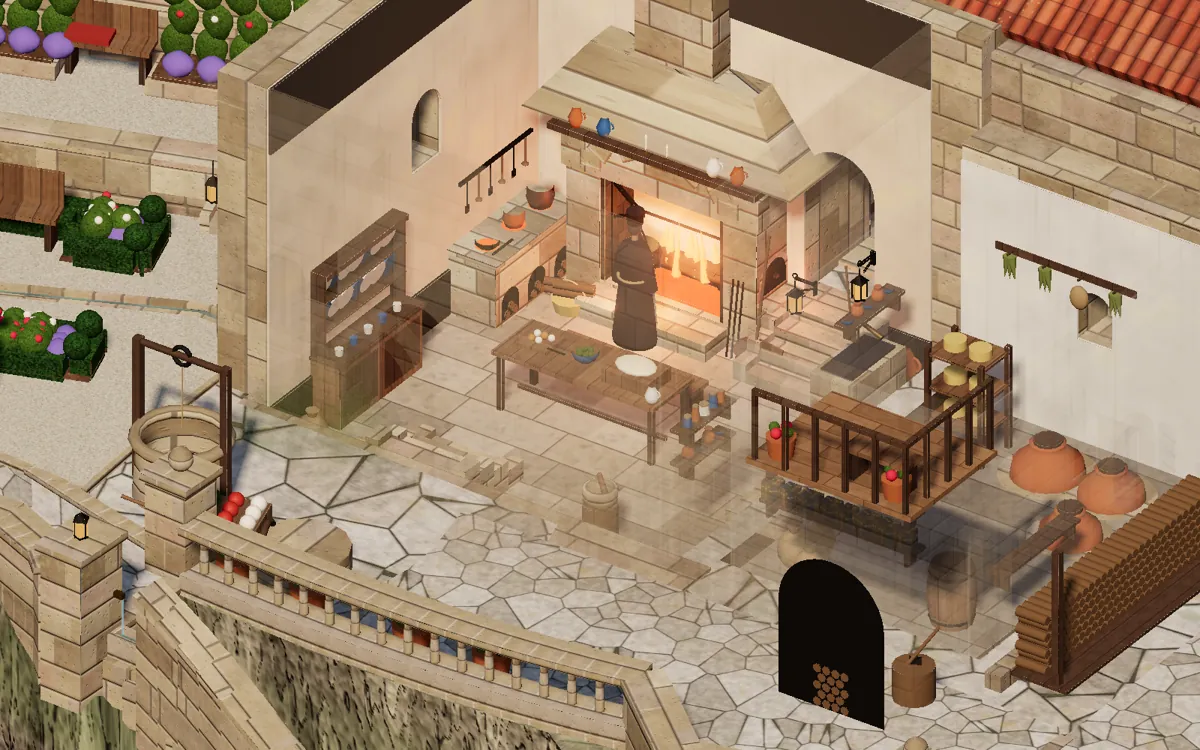
The kitchen of the Sky Monastery is of the same family: a square stone hall under an eight-sided drum and a tiled dome with an open lantern, its floor cut down into the rock. A cauldron swings on an iron crane in the great fireplace, under the icon of St Euphrosynos the Cook, and a door opens straight into the servery of the Old Hall.
Supper with the fingers
The abbot of the great monastery had Curzon to supper. A venerable monk poured water over his hands from a vessel like an antique coffee-pot, and he sat down on a cushion on the floor with the abbot and another officer of the house before a metal tray, set on a wooden stool turned upside down.
“No meat had entered into the composition of our feast, but it was very savoury nevertheless, and our fingers were soon in the midst of the most tempting dishes, knives and forks being considered as useless superfluities.”
At Barlaam the night before he had dined the abbot in the abbot's own room. The old man could eat no meat, and made up for it with other dishes; afterwards they drank from coffee-cups of thin old porcelain, and finished with tea, seaman's biscuit, little cakes from Yanina and a jelly of dried grape juice, until it was time to go to bed.
The cellar
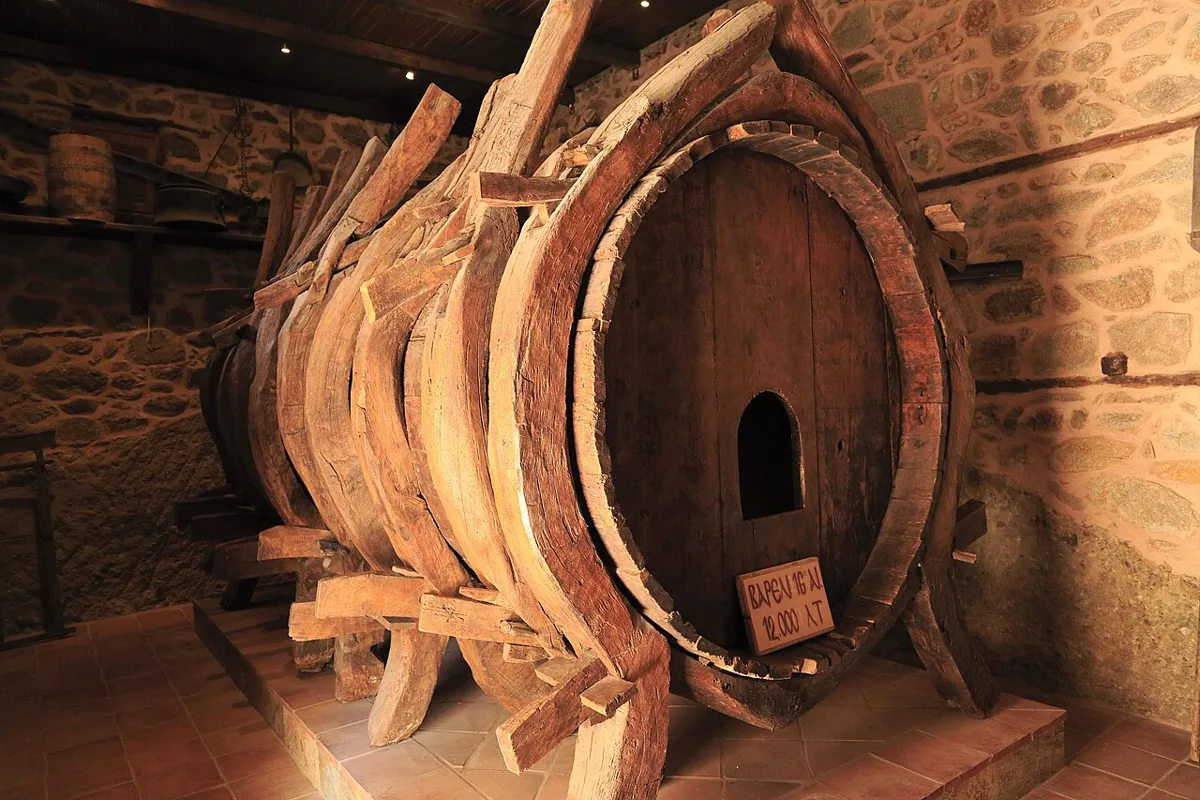
The grape is the monastery's other harvest. At Varlaam visitors are still shown an enormous wine barrel, built of wood alone. At Vatopedi, Riley was taken to the building that held the great winepress, made of heavy beams and timber, and did the sum for himself:
“Each of the 220 monks of Vatopedi draws his commons of wine every day; so do their 130 servants… Thus the consumption of wine in the course of the year must be enormous.”
The Sky Monastery presses its own. The winery stands on the vineyard ledge below the summit. The grapes are trodden barefoot in a purple-stained tank, work a week in an oak vat and go under a great screw press, and the casks lie in a cellar cut into the rock. The first of every pressing is set aside for the altar and kept under lock in the church. The rest comes up to the table, on every day that is not a fast.
In the house, at this hour
The winery
The press room smells of must and old wood. The casks lie in the cellar cut into the rock below.
Stand there now › Or go to the kitchen › Or to the bakehouse ›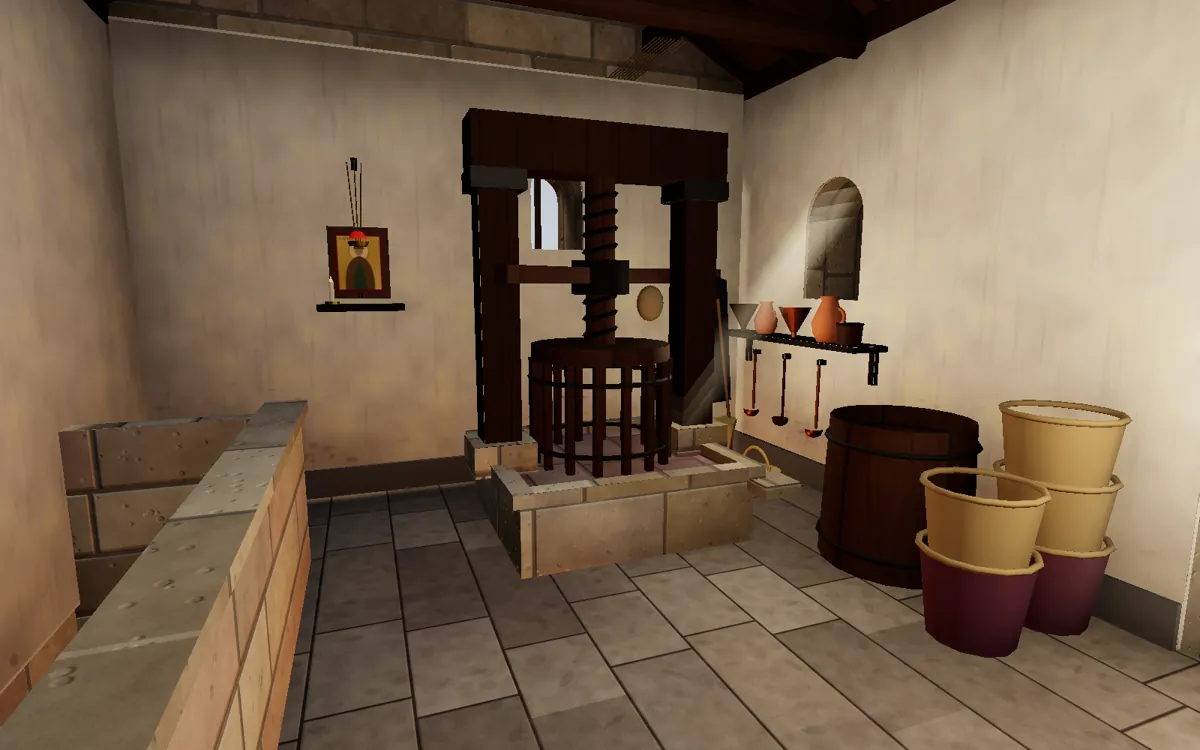
What is invented. The two halls, the domed kitchen, the bakehouse and the winery belong to the Sky Monastery, with their dates. The refectory at Barlaam, the kitchen and the supper at the great monastery are Curzon's; the tables and the wine of Vatopedi are Riley's.
Where this comes from. Robert Curzon, Visits to Monasteries in the Levant (London, 1849), chapter XIX, pp. 285–286 and 291–292, and chapter XX, pp. 300–301 and 305; Athelstan Riley, Athos, or the Mountain of the Monks (London, 1887), pp. 65 and 69. Both in public-domain scans at the Internet Archive. The barrel at Varlaam is from its photograph and the photographer's note.
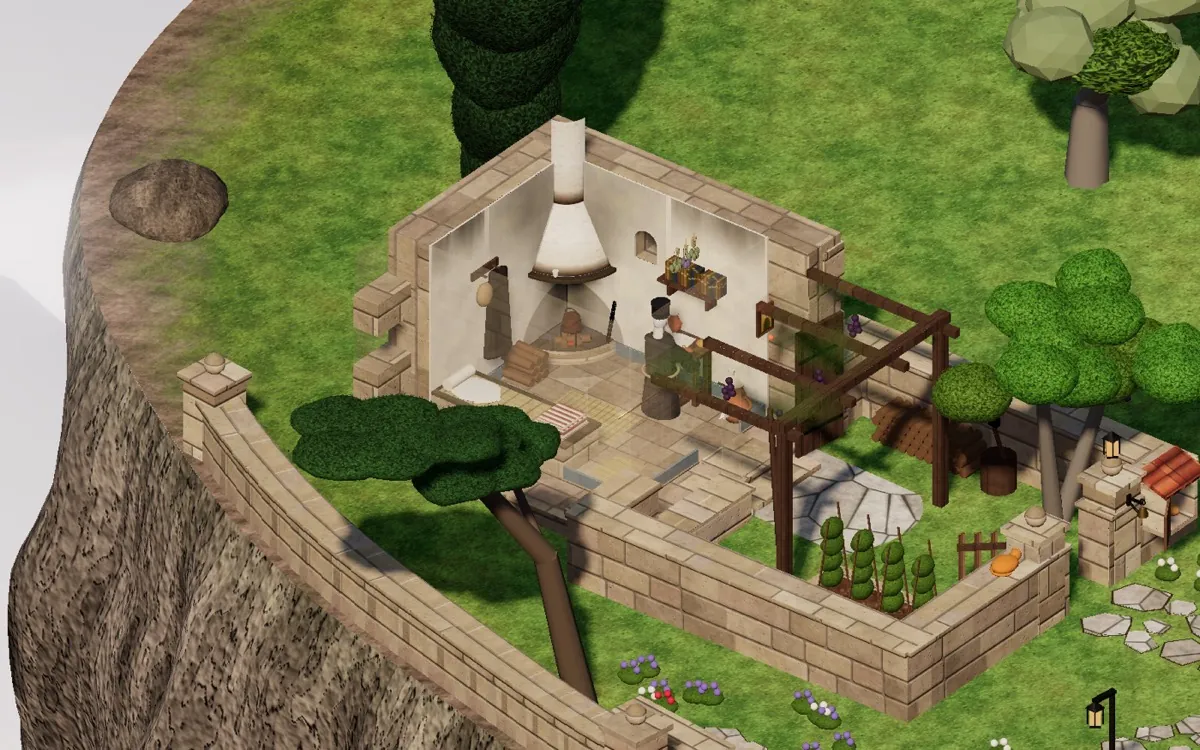 The next essayThe hermits ›Before the monasteries there were men in the caves, and one of them is still there.