The second essay
The church
Everything in it means something: the four columns, the dome they carry, the screen of icons, and the terrors painted where the brethren leave them at the door.
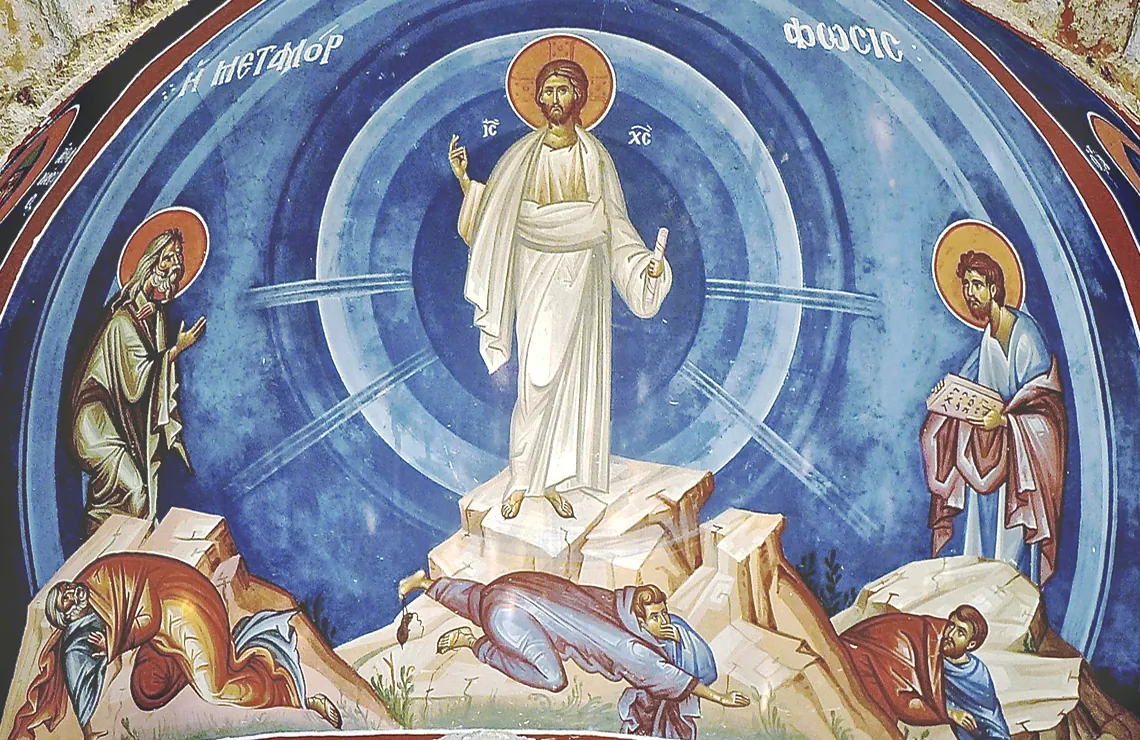
The great church of a monastery is its katholikon, and the rest of the house is arranged about it. In the Sky Monastery it stands on a podium on the highest ground of the rock, and it is the one room that can hold the whole brotherhood at once. It is dedicated to the Transfiguration of the Saviour, as is the katholikon of the Great Meteoron, the oldest and largest of the houses on the rocks of Thessaly.
Athanasios the Meteorite founded the Great Meteoron in the middle of the fourteenth century. A church was raised there in the second half of that century by the monk Joasaph, who had been a prince, and a part of its wall still stands inside the larger church built in the middle of the sixteenth, which was then painted throughout.
In the house, at this hour
The Katholikon of the Transfiguration
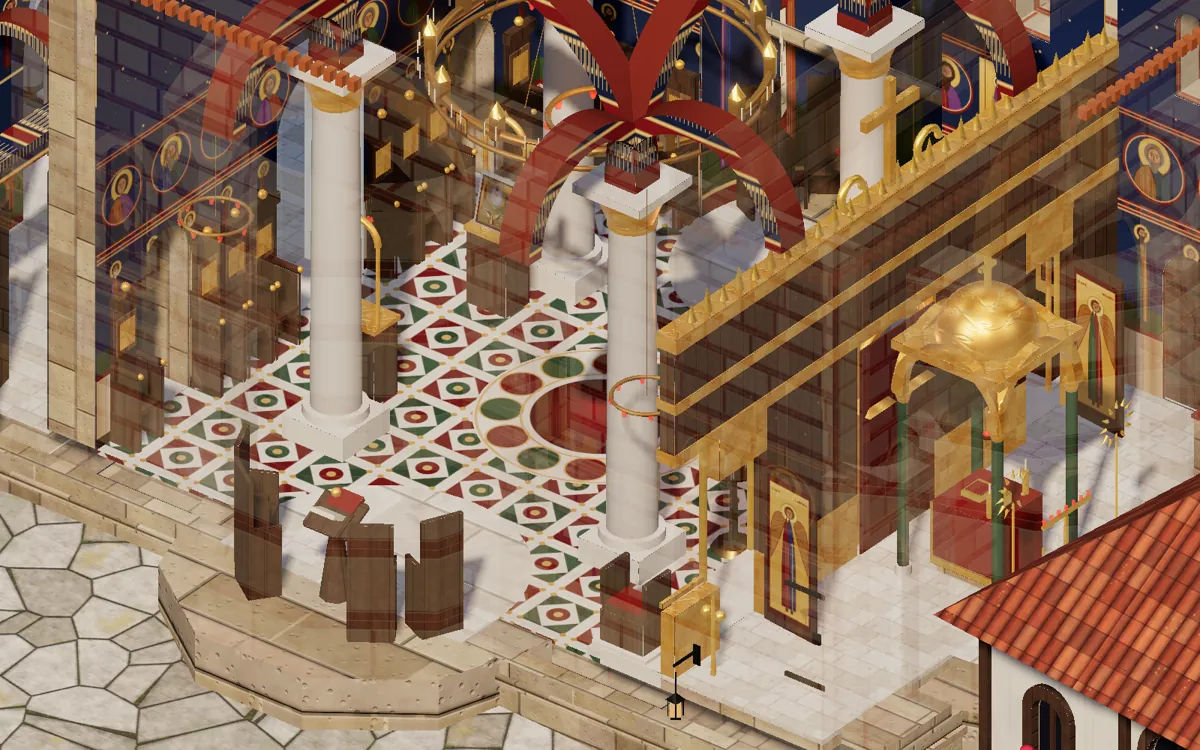
Stand in the nave under the dome. The bronze choros hangs over you, and it is lit and swung at Orthros, Vespers and Compline.
Stand there now ›Four columns and a dome
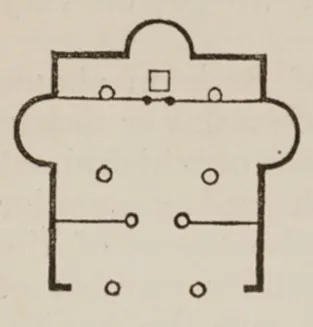
Robert Curzon, who was hauled up to the monastery of Barlaam in a net, went into its church the next morning and set down what he saw. It was dedicated to All Saints, its walls covered on every side with holy personages, and its plan is printed in his book: a square nave on four columns, with a rounded apse to the east and one to either side for the two choirs.
“Everything is symbolical in the Eastern Church; and these symbols have been in use from the very earliest ages of Christianity. The four columns which support the dome represent the four Evangelists; and the dome itself is the symbol of heaven, to which access has been given to mankind by the glad tidings of the Gospels which they wrote.”
The nave of the Sky Monastery is built to the same reading. Four great marble columns carry a high drum dome. Christ the Pantokrator looks down from it, the prophets stand round the drum, and the four Evangelists are painted in the pendentives, where the columns' weight is gathered. The two choirs sing from rounded bays to north and south, as at Barlaam, and eighteen stalls line the walls, one for every brother.
The screen and its three doors
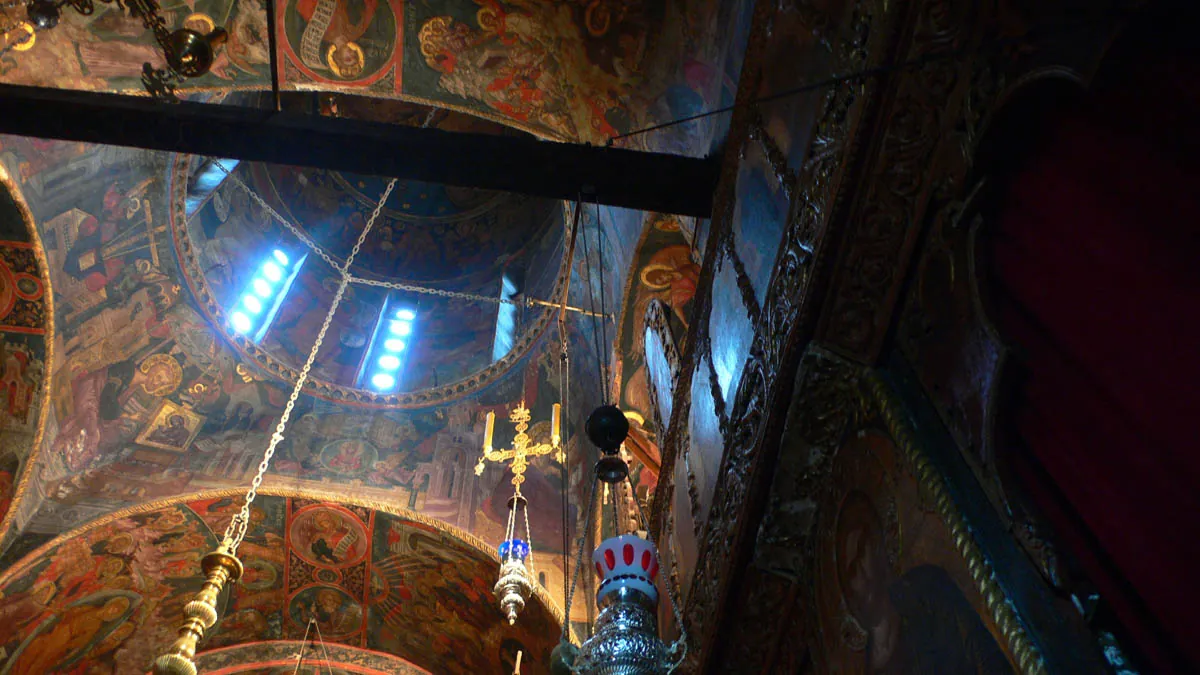
Between the nave and the altar stands the iconostasis, the screen of icons. Curzon found it at Barlaam much as it stands in any Greek church:
“…the altar or holy table … is separated from the nave by a wooden screen, called the iconostasis, on which are paintings of the Blessed Virgin, the Redeemer, and many saints. These pictures are kissed by all who enter the church. The iconostasis has three doors in it; one in the centre, before the holy table, and one on each side.”
Beyond it is the sanctuary, which he calls typical of the holy of holies of the Temple, its veil the curtain of the centre door. None but the priests and the deacon who trims the lamps go in, and they pass by the side doors; the centre one is used only in the liturgy.
The screen of the Sky Monastery runs the full width of the nave in three tiers of carved and gilded walnut: the great icons below, the feasts of the year above them, and the apostles turned toward Christ under the crowning cross. Its royal doors stay closed except in the liturgy, and the brethren who serve go in by the deacon doors on either side.
In the house, at this hour
The lite
The low, dark room before the nave, with the candle desk by the door and the nave's light beyond it.
Stand in the church ›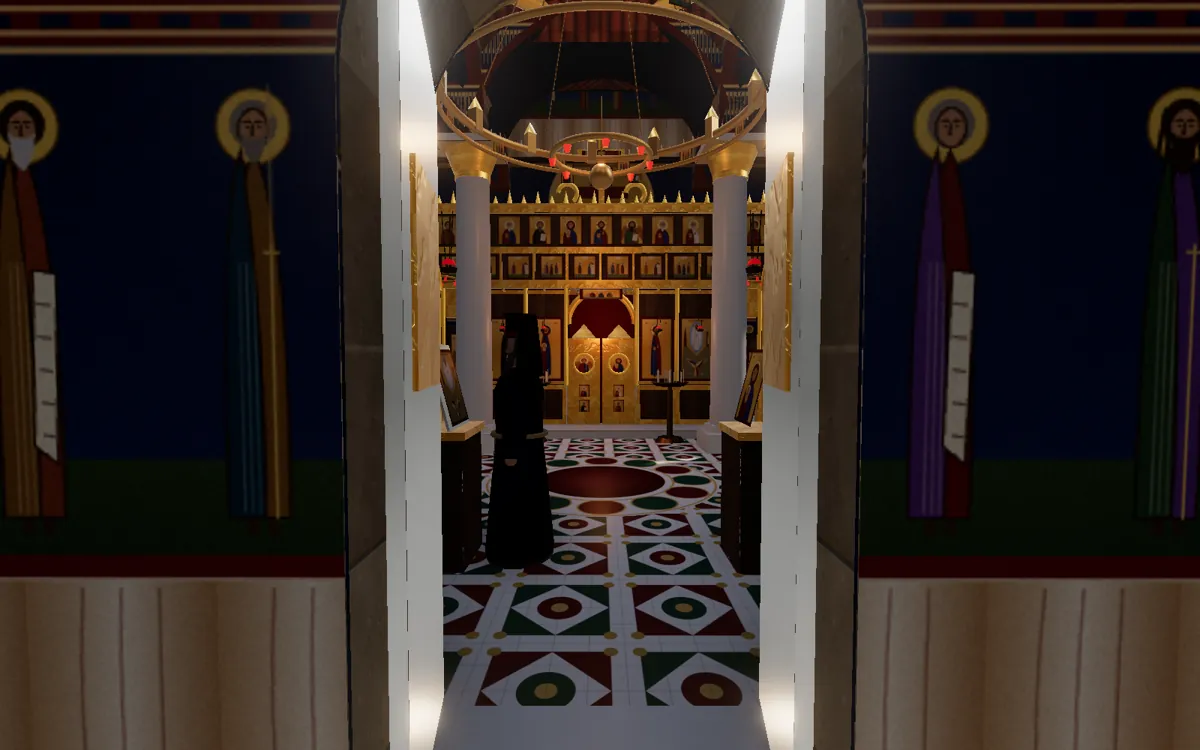
The terrors at the door
Before the nave of an Orthodox church comes a narthex or a porch, and it is there that the painters put what is hardest to look at. At Barlaam the porch stood on marble columns, and the wall on each side of the door was painted with the Last Judgment and the tortures of the condemned, “with a liberal allowance of flames and devils”.
“These pictures of the torments of the wicked are always placed outside the body of the church, as typical of the unhappy state of those who are out of its pale: they are never seen within.”
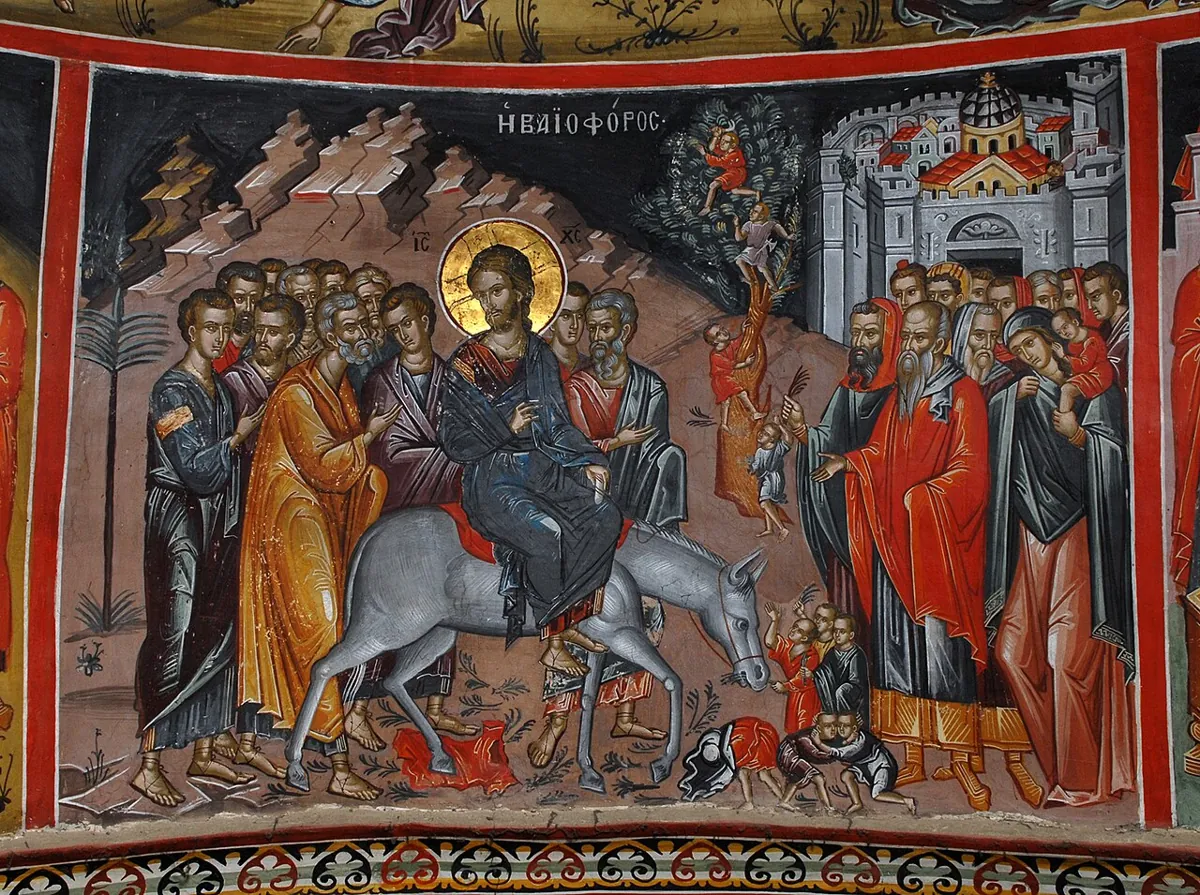
At the great monastery he found the brethren sitting to talk of an evening in a large open porch painted in bright colours with the martyrdoms of saints, “very hairy and very holy, and so like the old caloyers themselves, who were discoursing before them, that they might have been taken for their portraits”. Curzon did not much care for Greek painting, and said so at length. The sixteenth-century paintings of that church are now counted among the best of their age in Greece.
The Sky Monastery keeps the old order. Its lite, the inner narthex, is low and dark and painted with the Last Judgement. A brother passes through it to reach the nave, and leaves it behind him.
The water before the door
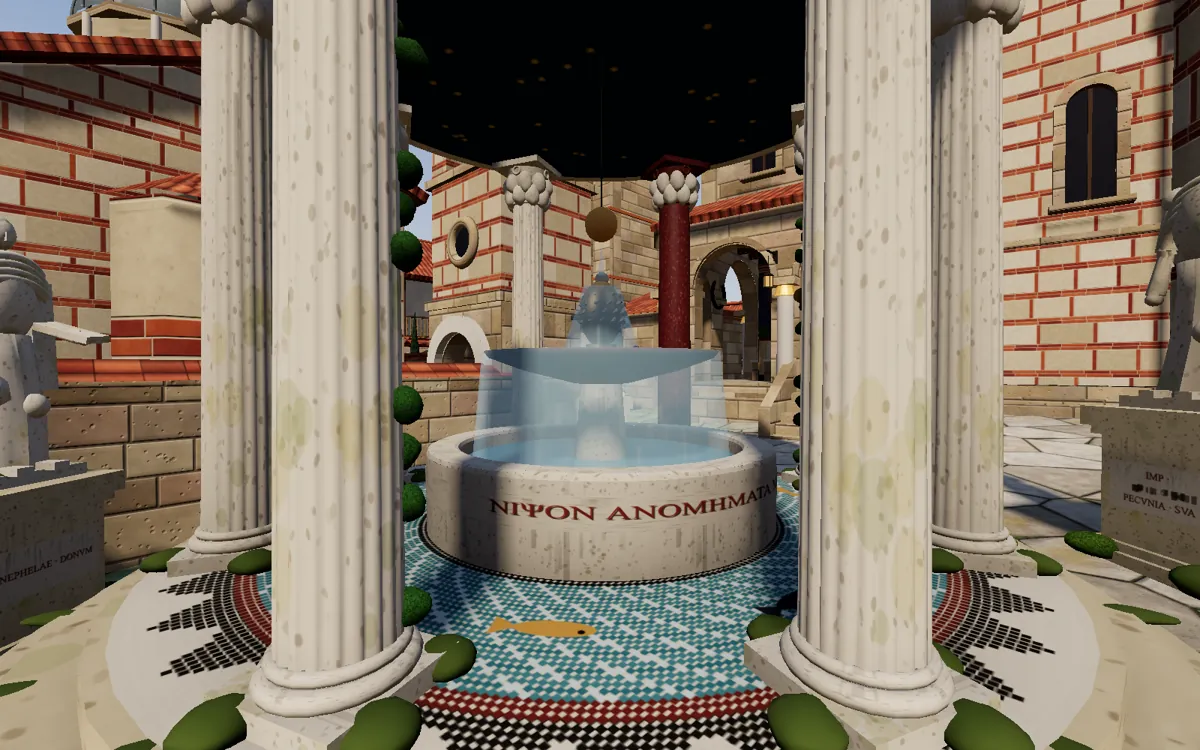
In the court before the church stands the phiale, the basin where the waters are blessed. The Sky Monastery's is older than the house: a round Roman temple of eight columns, one of them replaced in porphyry by the brethren.
In the house, at this hour
The phiale
Eight columns round a basin, in the court to the south of the church.
Stand there now ›What is invented. The Katholikon of the Transfiguration on the Broad Rock, its columns, its screen, its lite and its Roman phiale belong to the Sky Monastery. The churches of Barlaam and the great monastery are as Curzon saw them.
Where this comes from. Robert Curzon, Visits to Monasteries in the Levant (London, 1849), chapters XIX and XX, in the public-domain scan at the Internet Archive. The founding of the Great Meteoron, the dedication of its katholikon and its two building phases are from the articles on Meteora and the Great Meteoron at Wikipedia and the account at visitmeteora.travel; these want a scholarly source before they are relied on further. The photographs and the plan are from Wikimedia Commons.
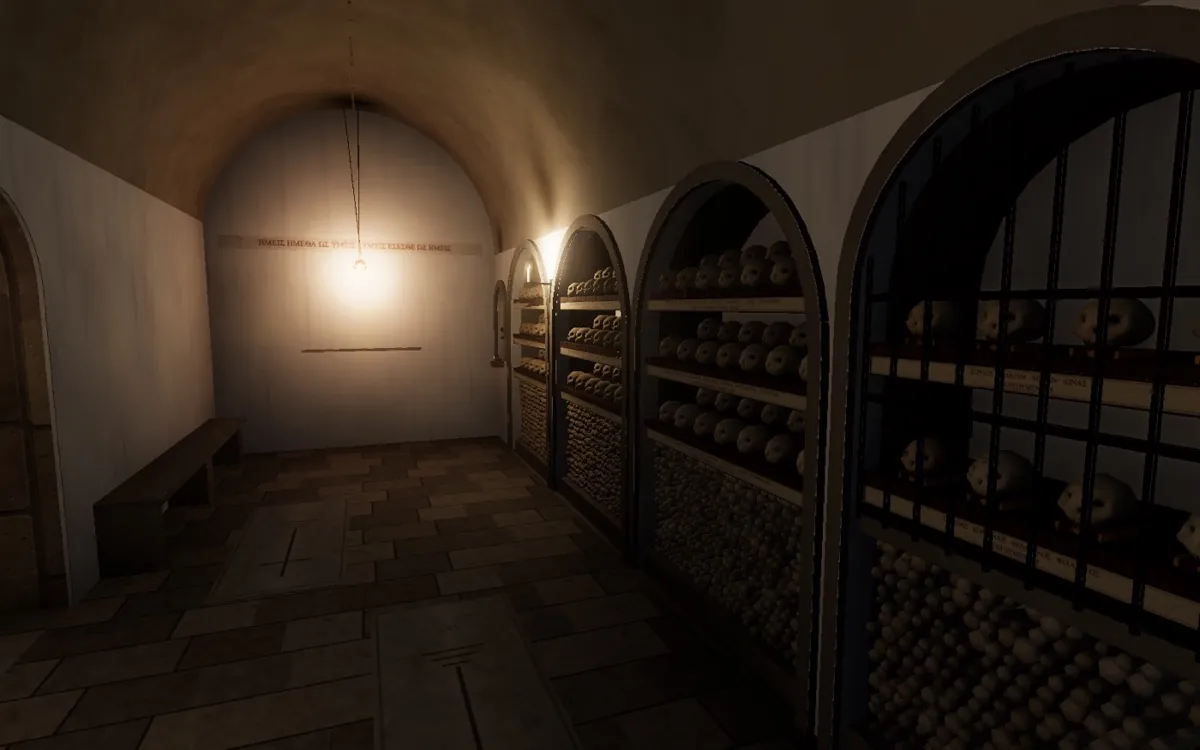 The next essayThe bones ›Under the church lie the fathers' bones after their three years in the earth, each skull with his name written on the brow.